TL;DR
This week I triaged three malicious PDF attachments. PDF-based attacks are claiming a growing share of malicious email, which pushed me to shift focus from general email security toward attachment-centric analysis.
The samples varied in technical sophistication, but the playbook was the same: manufacture urgency, force a click, and lean on disposable infrastructure.
Sample 1 - Facebook Recovery
This one was a Facebook “account locked” lure, built to make someone react fast. Nothing fancy in the flow: a couple redirects and then basic credential-harvest infrastructure. What stood out was how throwaway everything looked, from cheap hosting to minimal hardening.
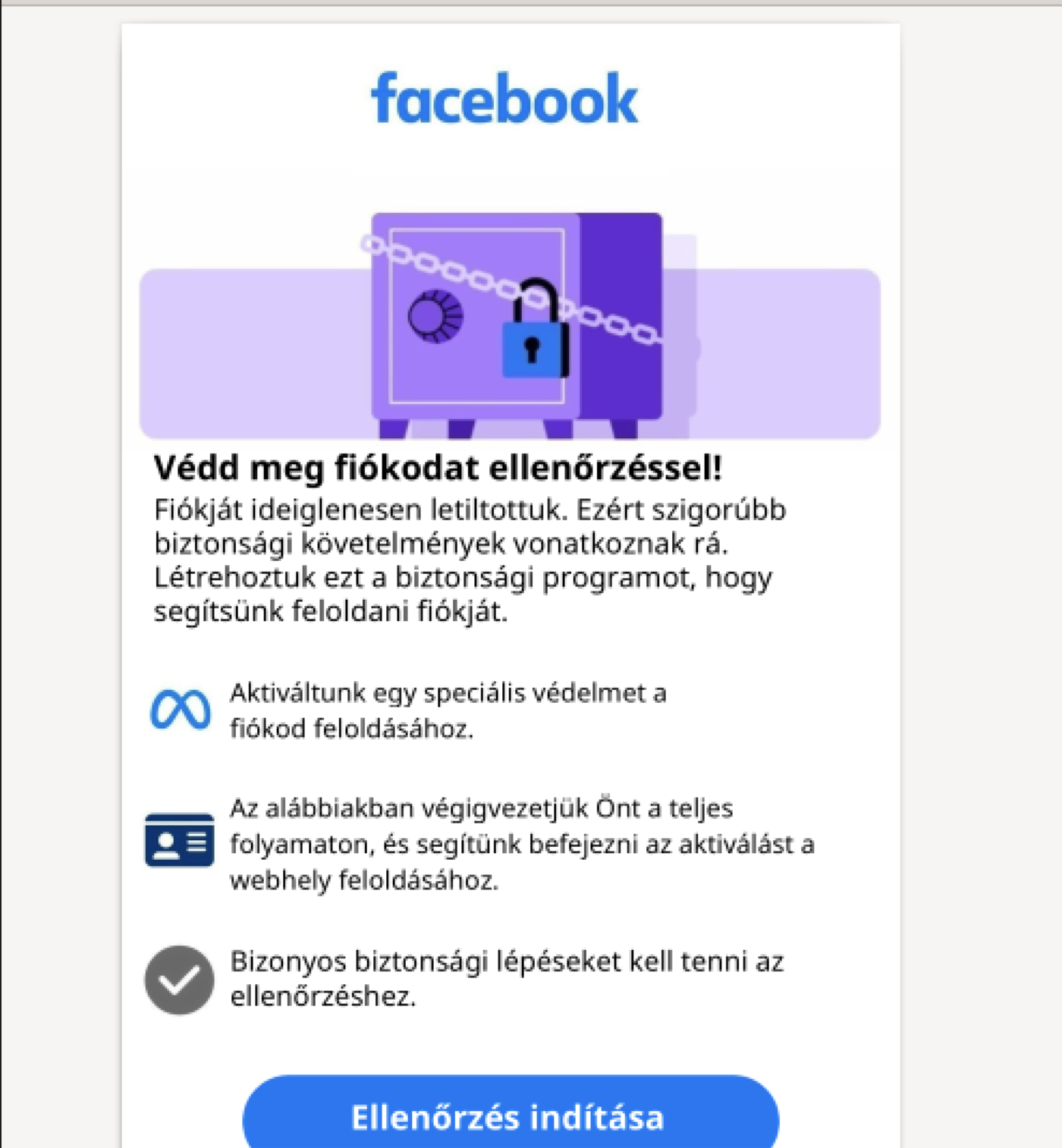
| Lure | Facebook "account locked" notice in Hungarian |
|---|---|
| Hidden Link | hxxps://www[.]maneger-accountr-solutieonst[.]site/step1 |
| Infrastructure | Webcake/Pancake (CNAME dns.webcake.io) |
| Reverse DNS | static.cmcti.vn |
| Web Server | openresty/1.27.1.1 |
| Certificate | ZeroSSL ECC (NotBefore: Dec 30, 2025) |
| Malware Bazaar | View sample |
| VirusTotal | View report |
hxxps://www[.]maneger-accountr-solutieonst[.]site/step1CNAME dns.webcake.io)static.cmcti.vnopenresty/1.27.1.1NotBefore: Dec 30, 2025)When I checked it, the phishing domain still resolved to a CMC Telecom VPS in Vietnam and the server was still up. But /step1 and the usual lure paths all returned the same Webcake unpublished-site placeholder.
Current state:
- PDF still carries phishing URL
- Domain still resolves
- OpenResty server still responds
- Lure content appears removed/unpublished
- No live credential collection flow observed
Conclusion: this was clearly a malicious delivery artifact. The infrastructure was still reachable, but the live lure content looked removed.
Sample 2 - Chase Invoice
The Chase invoice sample was a fake billing PDF with urgency baked in, but not much polish. Instead of doing anything complex, it used a blurred overlay to push a click into external infrastructure. The chain ended at a raw IP on cheap VPS hosting with exposed Windows ports and weak setup overall. No real evasion here, just a direct attempt to get someone to fetch the next stage.
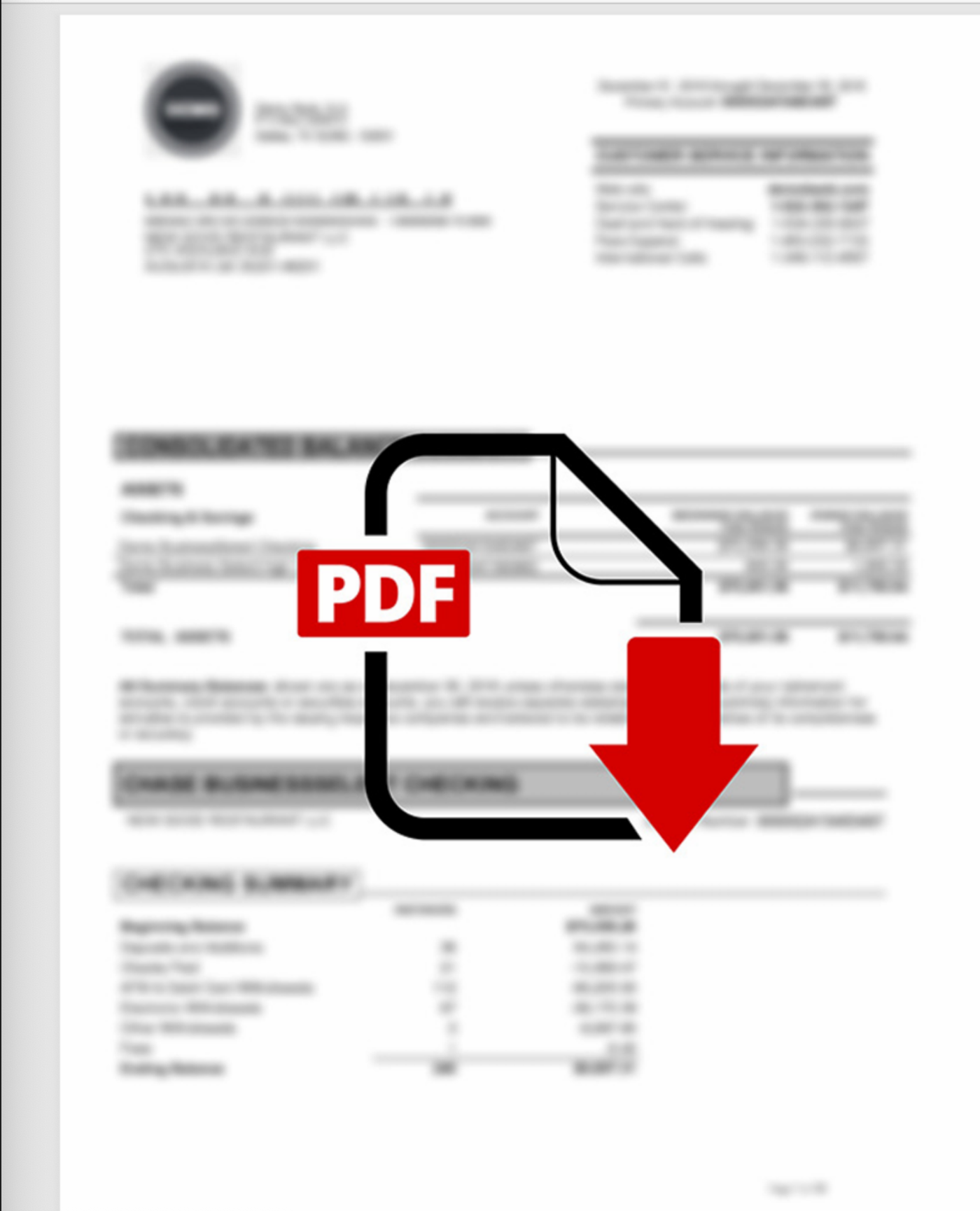
| Lure | Blurred "Chase invoice" with large download overlay |
|---|---|
| Hidden Link | http[:]//147[.]124[.]222[.]89/host/Factura%20N%c2%ba%2025000168.7z |
| Infrastructure | Majestic Hosting |
| Malware Bazaar | View sample |
| VirusTotal | View report |
http[:]//147[.]124[.]222[.]89/host/Factura%20N%c2%ba%2025000168.7zThis one was simple: visual pressure and one hidden URL to a raw IP serving a .7z stage. The destination sat on low-cost VPS infrastructure with exposed Windows-facing ports and inconsistent delivery behavior (connection resets and broken HTTPS upgrade handling).
Conclusion: not a well-run operation, but still good enough for initial delivery.
Sample 3 - "This Invoice Is Not Compatible With Your Browser"
The “invoice not compatible with your browser” lure stood out because the infrastructure did not look brand new. The domain goes back to the early 2000s, which can make it look more trustworthy at a glance. But the flow was still the same: fake browser issue, push the click, then route into credential-collection infrastructure. Underneath, it had the same familiar signs: redirects, light hosting, and disposable backend logic.
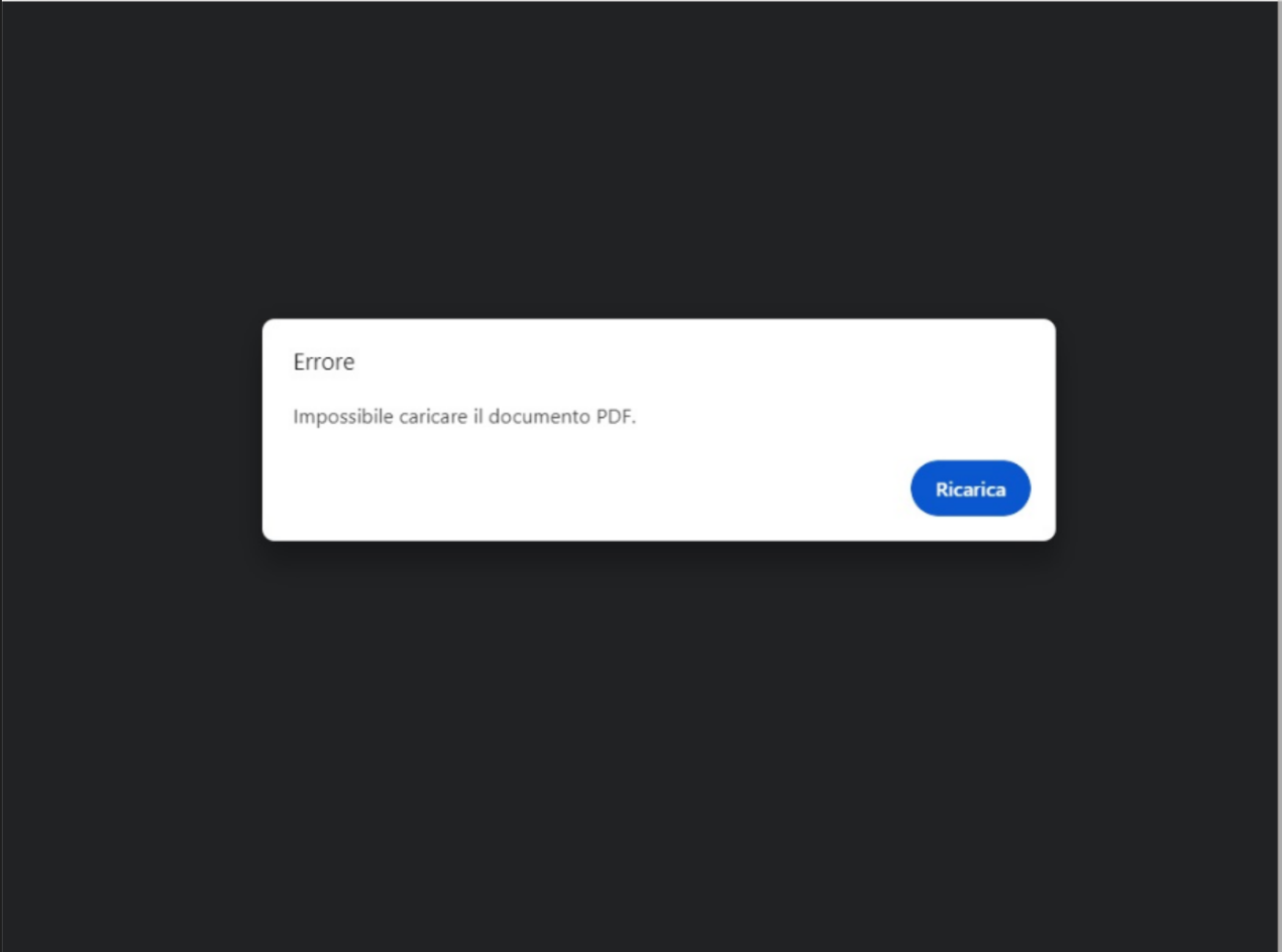
| Lure | Invoice-themed PDF with fake browser-compatibility error prompt |
|---|---|
| Hidden Links | https[:]//bookingc[.]netlify[.]app/#invoices-1617964062.pdfhttps[:]//bocking[.]netlify[.]app/#invoices-1645080830.pdf |
| Malware Bazaar | View sample |
| VirusTotal | View report |
https[:]//bookingc[.]netlify[.]app/#invoices-1617964062.pdfhttps[:]//bocking[.]netlify[.]app/#invoices-1645080830.pdfThis was the most interesting chain. One Netlify link was dead, while the other exposed source references including:
https://d33wubrfki0l68.cloudfront.net/js/18393a7b4e6c50bdf31d721382e24fa2d7fb581d/build.js
From that script, three endpoints stood out:
https[:]//challenges[.]laim[.]com/roombooking/https[:]//challenges[.]laim[.]com/roombooking/getroomshttps[:]//challenges[.]laim[.]com/roombooking/sendpass
The endpoint naming looked like a fake booking flow designed to collect credentials and submit them backend-side.
Domain context for laim.com:
- Creation date:
2000-02-11 - Updated:
2026-01-14
Apex behavior:
laim.comredirected to parked-domain sales landing- 302 redirect observed to
namekeen.com/landing/laim.com
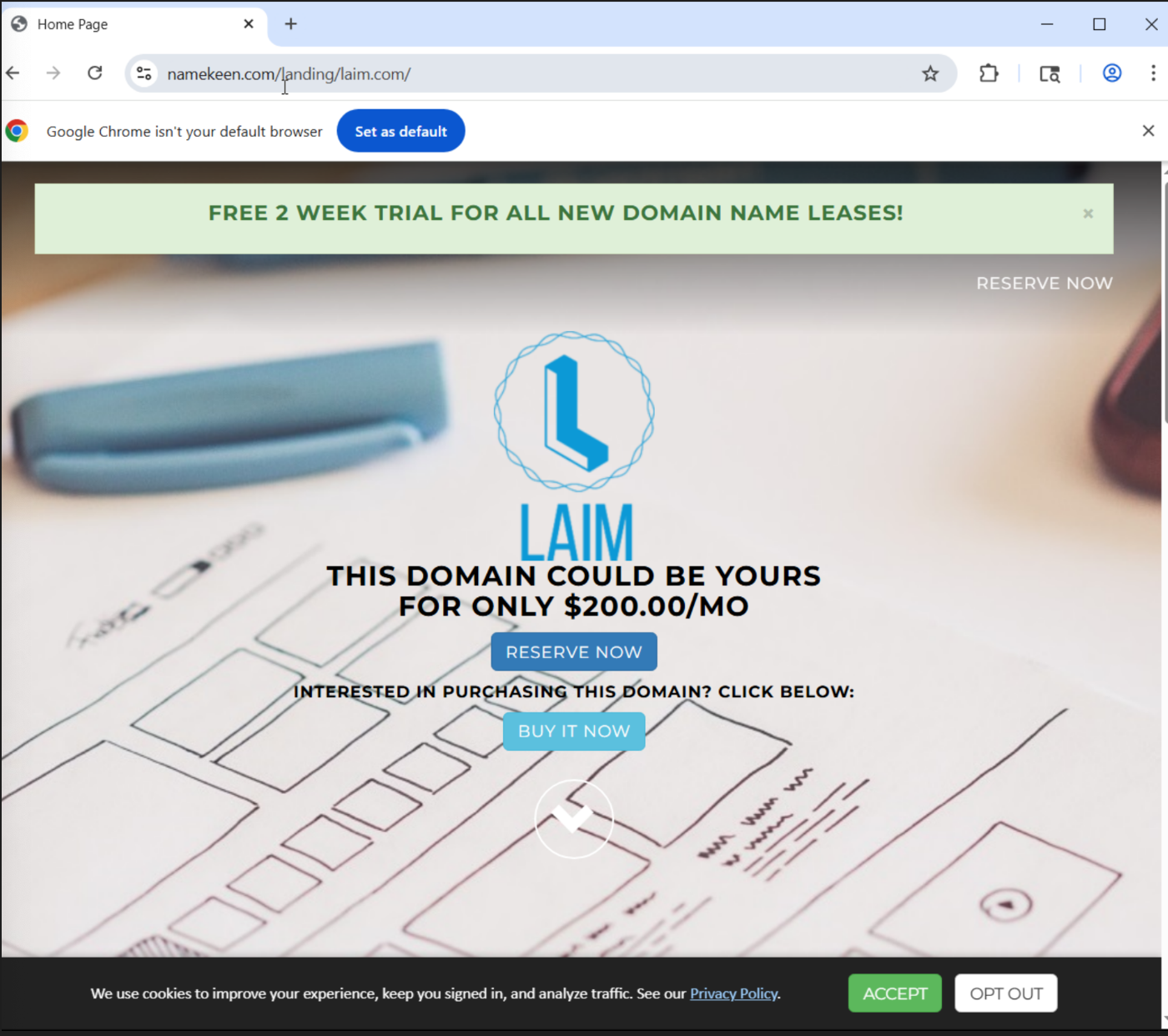
Conclusion: likely abuse of an aged domain pattern (or a previously compromised asset), with phishing collection logic sitting on subdomain paths behind a Netlify-fronted lure.
MITRE ATT&CK Mapping
Mapping it out for the record.
| ID | Technique | Observed |
|---|---|---|
| T1566.001 | Spearphishing Attachment | PDF attachment used as initial lure across all three samples |
| T1204.001 | User Execution: Malicious Link | Hidden PDF links rely on user click-through for execution path |
| T1583.001 | Acquire Infrastructure: Domains | Disposable phishing domains and subdomain routing used for campaign hosting |
| T1583.003 | Acquire Infrastructure: Virtual Private Server | Low-cost VPS hosting observed in active/residual phishing infrastructure |
| T1071.001 | Application Layer Protocol: Web Protocols | Credential/payload paths delivered over HTTP/HTTPS web endpoints |
| T1584.001 | Compromise Infrastructure: Domains | Aged domain pattern and parked apex with suspicious active subdomain workflow |
Cross-Sample Observations
None of these campaigns were technically impressive, and they did not need to be. Across all three, the same ideas kept showing up:
- Urgency and interruption (
account locked,invoice,browser error) - Social engineering over technical depth
- Cheap, disposable infrastructure
- A simple click path that gets users where the attacker wants them
These kits do not need to be sophisticated to work. They just need to stay up long enough and look believable enough to get interaction.